April 2nd, 2026
What Q1 2026 Taught Revenue Leaders About Continuous Planning, AI Fluency, and Cross-Functional Growth
Written by

Quang Do

Looking back on Q1 2026, one thing stands out: the increasing pace of change isn’t a phase. It’s the new baseline. AI has fundamentally changed things, and the sooner leaders internalize that, the better positioned their teams will be for the rest of the year and beyond.
Every revenue leader I’ve spoken with this quarter is navigating the same reality. AI is reshaping how work gets done. Buyers are scrutinizing every dollar. Headcount is under pressure. And that annual plan that felt solid in December is already showing seams. Not because anyone planned poorly, but because the world kept moving at a faster pace while the ink was drying.
What I want to dig into is what I’ve actually seen playing out across our client engagements. Three patterns keep showing up. None are brand new ideas, but they’ve quietly become the things that separate the teams gaining ground from the ones just trying to keep up.
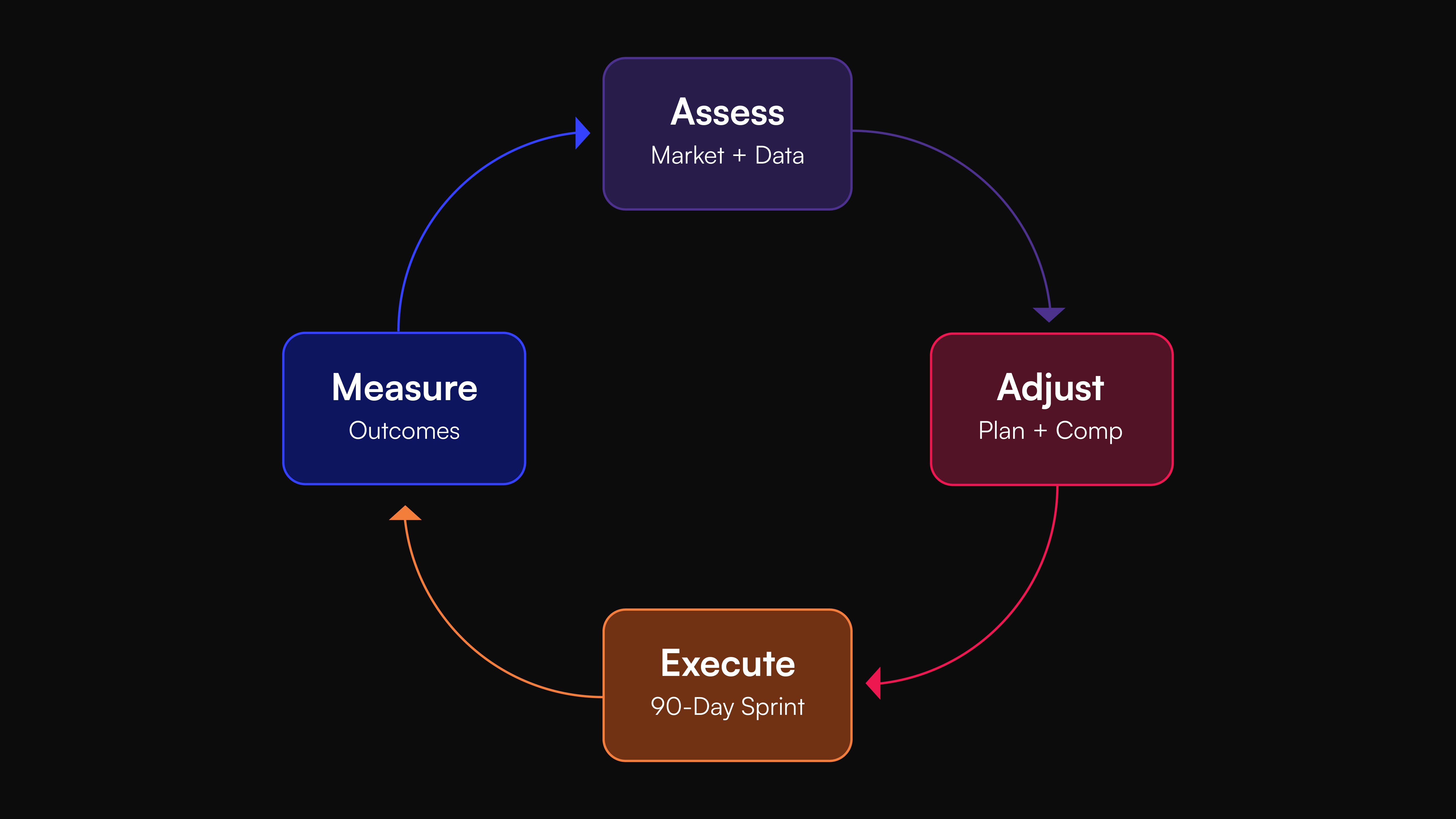
The annual plan isn’t the plan. The cycle is.
The old cadence was familiar and in some ways comforting. Plan in Q4, execute in Q1, adjust at midyear, review in Q3, repeat. But the inputs are changing too fast for that cycle to hold. A new competitor shows up in February, and suddenly the accounts you assigned to reps need to be reshuffled. A product launch gets pulled forward, and the way you’re paying your sales team no longer matches what you need them to sell.
We saw this firsthand with a mid-market SaaS client this quarter. They’d locked their compensation plan in December, and by late January a shift in their product roadmap meant two of their sales comp measures were tied to a selling motion they were already walking away from. Instead of waiting until midyear, they used the rolling review cadence we’d built together. Within a few weeks the plan was updated, reps kept their focus, and the business kept moving. A year ago, that same adjustment would have taken a full quarter.
Here’s the part that doesn’t get talked about enough: when the go-to-market plan changes, it ripples across every function that supports it. Finance has to reforecast. Rev Ops needs to rework territories and backend systems. HR has to revisit headcount plans and hiring timelines. If you don’t bring those teams into the rhythm early, you end up with a sales org that’s ready to move and a support structure still catching up. The best companies we work with treat Finance, Rev Ops, and HR as planning partners, not downstream recipients of decisions already made.
The harder shift isn’t operational. It’s psychological. We’ve conditioned teams to treat plan changes as evidence something went wrong. But in this environment, the ability to adjust without losing momentum is the skill. Change isn’t a disruption to manage around. It is the work.
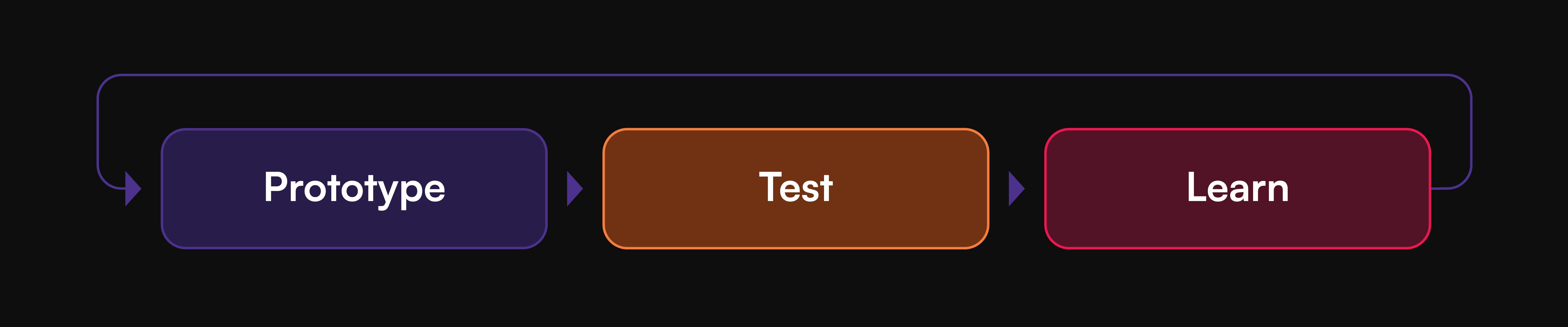
When the cost of being wrong approaches zero, the rate of learning goes through the roof.
Something shifted when revenue leaders could describe what they wanted and get a working version back in minutes. Not polished or production-ready, but good enough to stress-test an idea or sketch out a solution before anyone commits real time or budget. Call it “vibing” if you want. The point is that the gap between having an idea and being able to test it has gotten very, very short.
We recently needed to model three different ways to pay a client’s sales team for the coming year. Each version had different rules for how bonuses kicked in, how base pay related to total earnings, and when reps would start earning above their target. Previously that would have taken the better part of a week. Using AI-assisted prototyping, we had all three modeled and ready for the client to react to in under a day. The conversation that followed was sharper because we’d explored more options before locking anything in.
Why does that matter? Because it lowers the cost of being wrong and the need to be perfect. And when the cost of being wrong drops, the rate of learning climbs. This isn’t about replacing anyone. It’s about expanding what one person can explore before needing to pull in a broader group. That’s a real advantage when the speed of iteration is often what separates a good decision from a great one.
Specialization Matters. Silos Don't.
RevEng Consulting partners with revenue leaders to design compensation plans, GTM strategies, and operating models that hold up when the market moves. Our Growth Excellence Model (GEM) gives leadership teams a structured way to diagnose what’s working, identify what’s not, and build a revenue engine designed for continuous adaptation.
If your Q2 plan could use a second set of eyes, or if you’re rethinking your comp design, coverage model, or cross-functional alignment, let’s talk.