

Out-of-plan elements are compensation arrangements that fall outside the standard plan rules. They cover new-hire ramps, role transitions, special projects, market development, customer recovery, and discretionary recognition. The situations every program encounters but no standard plan can fully anticipate.
This is part of our series on the Sales Compensation Growth Model, and the ninth of the ten plan-level elements. It follows crediting rules, and it is where a plan builds in the flexibility to handle unique cases without compromising its integrity.
The principle is flexibility with strong controls. A plan with no room for exceptions becomes brittle and unfair in the situations it did not foresee, while a plan with ungoverned exceptions loses its integrity one special case at a time. The goal is to anticipate the legitimate exceptions and govern them well.
Every compensation program encounters situations the standard plan cannot handle. The strongest programs anticipate these situations and design appropriate responses in advance, rather than constructing each solution under pressure when the need arises.
Anticipate them and design the response in advance, rather than improvising under pressure.


Each situation is predictable, so each response can be designed in advance and governed, not negotiated in the moment.
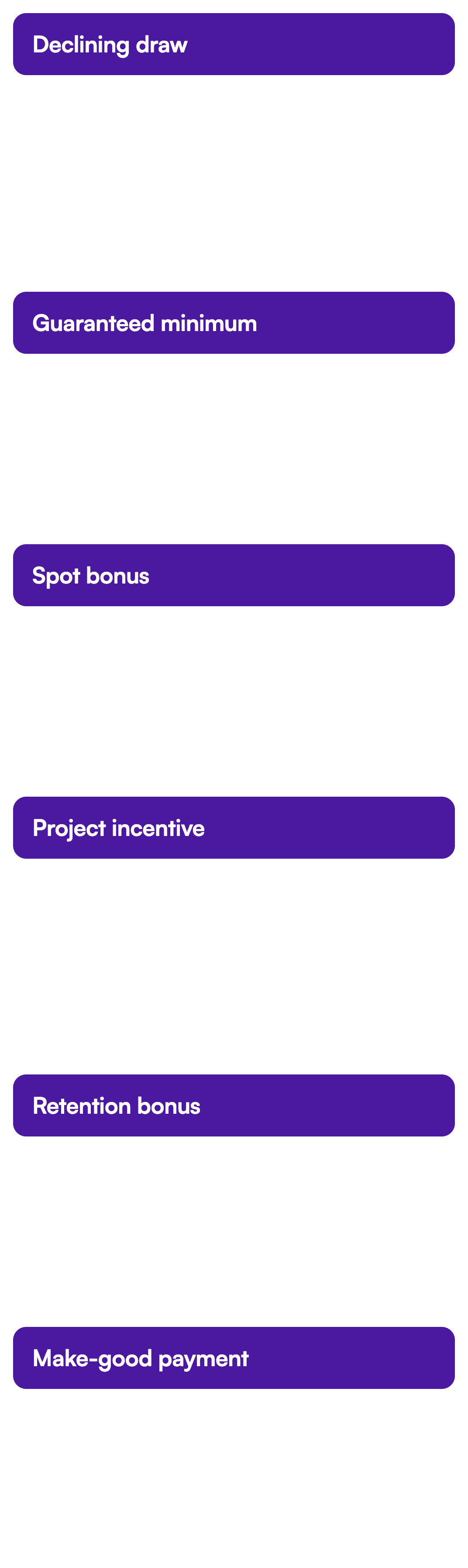
Each situation has a well-worn solution. New hires benefit from a declining draw or guaranteed minimum during ramp. Role transitions are handled with pro-rated targets and blended compensation through the transition. Special projects warrant a project bonus or temporary quota relief with alternative metrics. Market development calls for activity-based compensation or milestone payments while standard metrics are developed. Customer recovery may warrant a retention or save incentive outside the standard new-business focus. Discretionary recognition captures exceptional contributions that the standard plan does not measure.
What these situations share is that they are predictable in kind even when unpredictable in timing. A business will hire, promote, launch products, and occasionally need to save an account, and knowing that in advance means the response can be designed once and applied consistently rather than improvised each time. Designing the response in advance is also what keeps the arrangement fair, since every seller in the same situation is treated the same way.
The related policies governing terminations, leaves of absence, and chargebacks are included in the compensation policy document under the administration and governance section. The distinction is that those handle events the plan must accommodate, while out-of-plan elements handle situations the plan chooses to compensate for.
Out-of-plan payments are where program integrity most often erodes. The fix is structured governance, with clear approval authority, documentation requirements, budget allocation, and tracking that prevents temporary arrangements from quietly becoming permanent.
A four-step approval process keeps each request grounded: a documented business justification; validation of budget impact and consistency; approval at the level appropriate for the dollar amount and risk; and tracking for future analysis. The discipline is not to eliminate exceptions, which would make the plan rigid, but to make every exception visible, justified, and reviewed, so the program keeps its flexibility without losing its integrity.
Approval thresholds and budget allocation are the financial guardrails that keep out-of-plan elements sustainable. Most organizations target out-of-plan payments at 3 to 5 percent of total compensation cost, with 10 percent as the maximum safe threshold above which the standard plan likely needs redesign.
Structured approval and a budget cap keep temporary arrangements from becoming permanent.
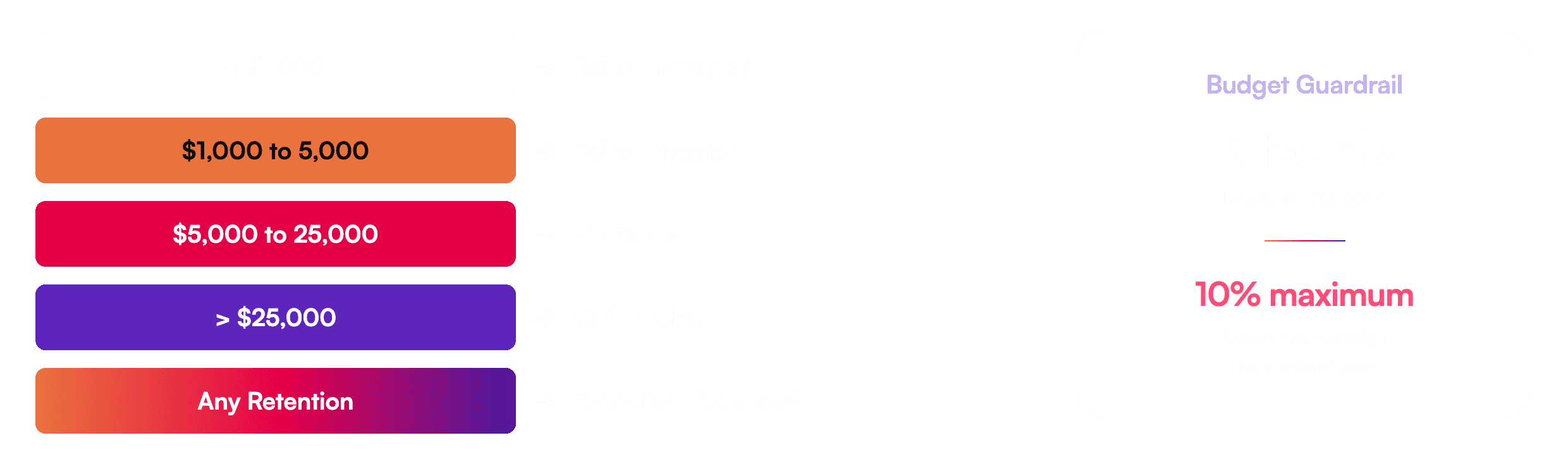

Approval authority scales with the dollar amount, from sales-manager approval at lower thresholds up to VP, CFO, or executive approval at higher ones, with any retention arrangement requiring executive sign-off. Budget controls include a separate budget allocation, monthly tracking against budget, quarterly true-ups, annual limits per individual, and aggregate team limits.
Documentation captures the business justification, situation details, amount and duration, success criteria where applicable, and the full approval chain.
The scaling approval is what makes the control proportional. A small spot bonus should not require the same scrutiny as a large retention package, and forcing every exception through the same high gate would either slow the plan to a crawl or, more often, push managers to route around it. Matching the level of approval to the size and risk of the request keeps the process both fast for small cases and rigorous for large ones.
A handful of arrangement types cover most out-of-plan needs, each with its own typical handling. Documenting them in advance turns each one into a standard response rather than a negotiation.

A few patterns indicate that out-of-plan elements are drifting from their purpose, and catching them early keeps the program healthy.
Payments exceeding 10 percent of total compensation cost, which signals the standard plan is not working and likely needs redesign.
The same individuals repeatedly receiving exceptions, which signals a job-definition issue or a governance gap.
Standard plans requiring frequent exceptions to work, which signals a mismatch between the plan and business reality.
Managers using exceptions to avoid performance conversations, which signals a gap in the performance management process.
Exceptions becoming expected rather than exceptional, which signals program integrity erosion that needs immediate attention.
These signals are most useful when reviewed on a regular cadence, alongside the broader plan health assessment in administration and governance, so small drifts are corrected before they become structural.
A few practical disciplines keep out-of-plan elements working as intended. Each is straightforward, and together they preserve flexibility without sacrificing program integrity.
Set clear criteria upfront for what qualifies for out-of-plan treatment.
Budget 3 to 5 percent of total compensation cost for out-of-plan elements.
Require written justification for all exceptions above a defined dollar threshold.
Track patterns to identify systemic issues rather than treating each case in isolation.
Review usage monthly and refine the policy quarterly.
Out-of-plan elements handle the transitions and overlaps created by crediting rules and role changes, draw their budget discipline from budget and financial goals, and support the talent strategy through ramp protection and retention. Their governance belongs to the same rhythm as administration and governance.
They are also a test of the simple and scalable principle, since a plan that requires constant exceptions tells you it is not simple enough to fit the business it serves. Used well, out-of-plan elements keep the core plan clean by giving the edge cases a governed home of their own.
Out-of-plan elements build in the flexibility a program needs, with the controls that keep it honest. Anticipate common situations—new-hire ramp-up, role transitions, special projects, market development, customer recovery, and discretionary recognition—and design a governed response for each in advance.
Hold spend to 3-5 percent of total compensation, scale approval authority with the dollar amount, document every exception, and watch for warning signs that indicate the standard plan needs work. Flexibility with strong controls is what lets a plan handle the unexpected without losing the integrity that makes it trusted.
The Complete Framework in One Place
This article goes deep into one element. The full Sales Compensation Strategy and Design Guide works through all twenty-five, with the embedded tables, worked examples, and diagnostics we use in client engagements. It is built to be read from front to back the first time and then used as a reference.
Build Governed Flexibility Into Your Plan
Our sales compensation and incentive design work sets the out-of-plan structure, approval controls, and budget guardrails that keep exceptions from eroding the program.
See The Full Framework
The Sales Compensation Growth Model shows how out-of-plan elements connect upstream to strategy and downstream to every tactical element of the plan.
The final plan element is special incentives—SPIFs, contests, and recognition programs— that target strategic priorities and are used sparingly so they complement the core plan rather than complicate it.