

Crediting rules govern how credit for a deal is allocated among the people who contributed to it. They cover primary and secondary credit, split percentages, and team-based credit across the AE, the sales engineer, the product specialist, the customer success manager, and the partner team.
This is part of our series on the Sales Compensation Growth Model, and the eighth of the ten plan-level elements. It follows the performance period and payout, and it decides who gets paid for what in any environment where more than one role can contribute to a deal.
The guiding principle is to design for collaboration, not competition. Crediting rules should encourage the roles that need to work together to do so, while maintaining enough individual accountability so each seller still owns their contribution.
Crediting rules sit alongside measure selection and pay curve design as one of the most consequential decisions in the plan. They shape how roles work together, how disputes get resolved, how the budget is consumed, and how the program supports or undermines the sales motion. A plan with strong measures and a clean pay curve can still struggle if the crediting rules pull roles in different directions.
It is also where many programs accumulate complexity that does not pay off. Splits that seemed reasonable when introduced quietly compound over time, and small administrative burdens become structural ones. The strongest programs revisit crediting rules deliberately and prune them on a regular cadence.
The right level of crediting complexity is the level the sales motion genuinely requires. Simple transactional sales with single-seller ownership are best served by simple crediting, with one seller receiving full credit. Complex consultative sales involving several contributors call for more deliberate crediting that recognizes each role's contribution.
Mismatches in either direction create friction. Simple crediting applied to complex team sales often creates conflict between the roles meant to collaborate, while complex crediting applied to simple sales adds administrative overhead without improving outcomes. The design question is how the work actually gets done, which is set in the sales process and the organizational structure and role design.
Several crediting models are available, each suited to a different motion and contribution pattern. The visual and table below summarize the most common options.
Complexity is a cost. Choose the model the motion genuinely requires.
Simple crediting for transactional motions; deliberate crediting only where team selling genuinely requires it.
Each model trades cost against collaboration differently. Hard splits are budget-neutral but can discourage a seller from pulling in another role; double credit removes disputes but costs more; overlay preserves a clear owner while motivating support roles; and milestone and pool-based models fit the most collaborative and stage-driven motions. Shadow credit tracks involvement without adding compensation cost.
Crediting design runs along a spectrum from simple to complex, and the right point depends on the motion, the deal economics, and the administrative capacity behind the plan. Pushing complexity in the name of fairness can create overhead that exceeds the fairness gain.
Simple structures, such as single-owner or first-touch and last-touch, are easy to understand and administer, though they may not reflect actual contribution. Balanced structures use predefined split rules with two to three participants and clear role definitions, reflecting contribution reasonably well while keeping administration manageable. Complex structures with many participants and activity-based allocation produce highly accurate attribution but are difficult to manage and communicate.
Most organizations find that the balanced point fits their needs, and the reason is worth stating plainly. A crediting rule a seller cannot explain to a new hire is a rule that will generate disputes regardless of how accurate it is, because accuracy the field cannot verify does not read as fairness.
Splits add value when the sales motion calls for them, and they are a cost when it does not. Knowing which situation you are in is most of the decision.
Consider split crediting when multiple roles are essential to deal success, the average deal size justifies the administrative complexity, team selling is core to the go-to-market model, the plan needs to actively encourage collaboration, or territories and accounts naturally overlap across roles.
Keep crediting simple when sales cycles are short and transactional, roles have clear and separate responsibilities, administrative resources are limited, deal values do not justify the complexity, or individual accountability is the priority. Splits earn their place only when the work genuinely calls for them.
The test that resolves most cases: would the deal have closed without the second role? If yes, the second role may deserve recognition but not credit, and shadow crediting exists for exactly that situation.
Consumption- and usage-based businesses face a dimension that traditional credit does not: the revenue the credit is based on arrives over time rather than at signature. This raises a central question of who bears the consumption risk, the company or the seller, and the crediting design is where that decision becomes concrete.
How much commission pays at booking versus as the customer actually consumes.
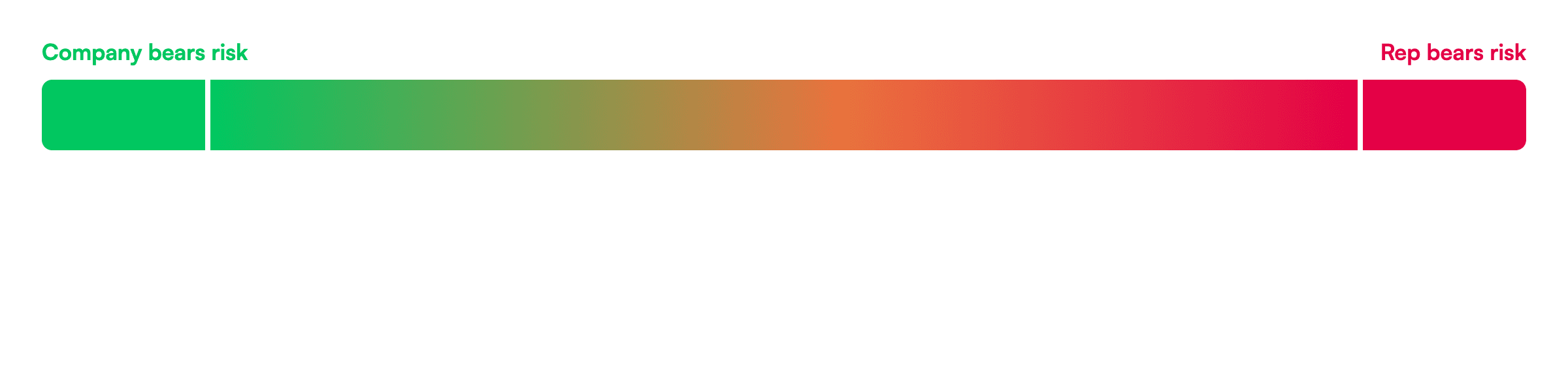
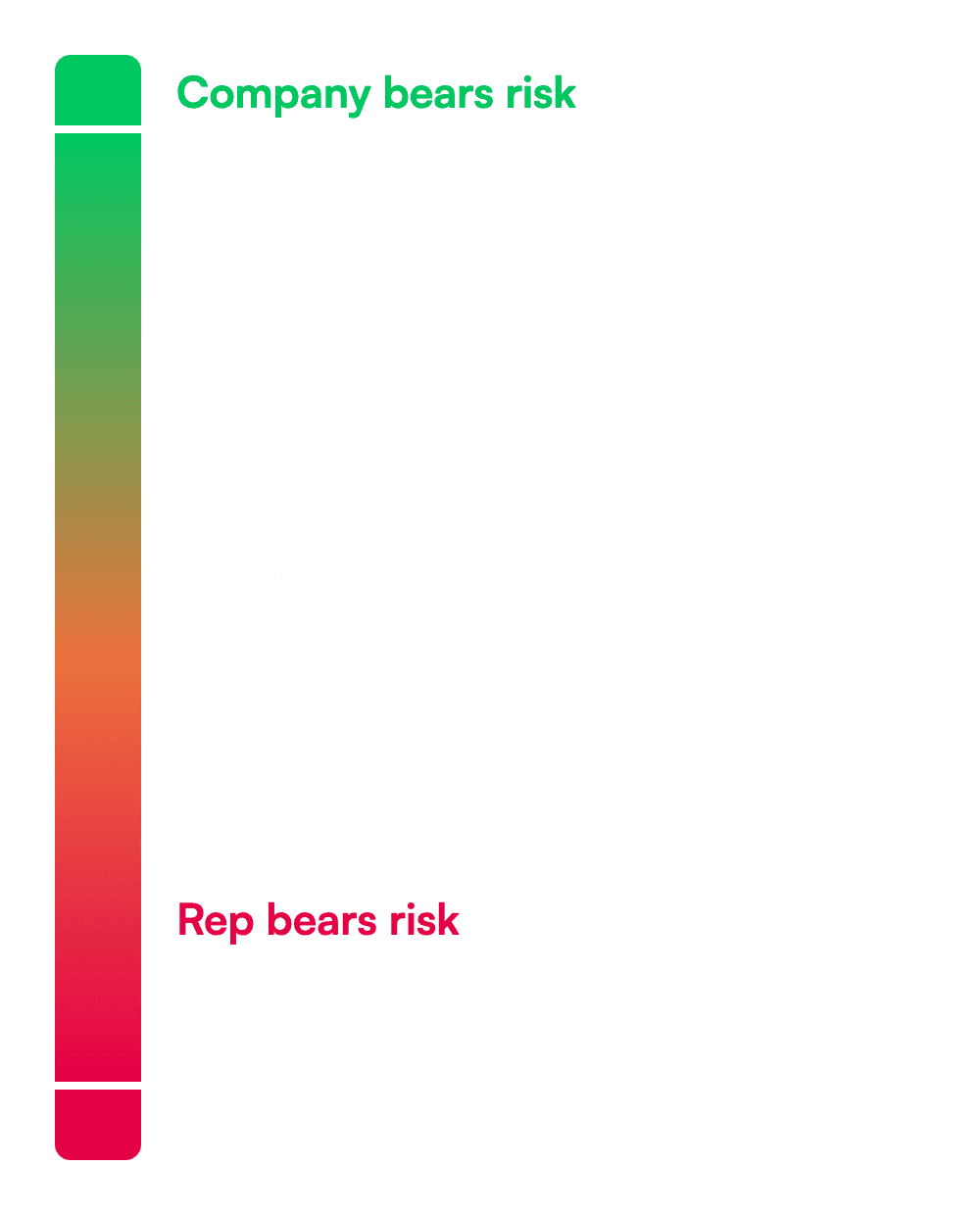
Most organizations share risk by role: AEs weight toward booking, Customer Success weights toward consumption.
Company-borne models pay most or all commission at booking, which improves talent attraction and gives sellers visibility into earnings, but increases the company's exposure and can reward bookings without regard for customer fit. Rep-borne models flow commission as customers consume, aligning the seller with customer success and matching commission expense to recognized revenue, at the cost of income predictability for the seller.
Most organizations adopt a hybrid model that allocates risk based on each role's influence on consumption. Account Executives who control qualification and deal structure might receive 70% to 80% of commission at booking, with the balance tied to implementation success or early consumption milestones. Customer Success Managers who directly influence adoption might be compensated entirely on consumption growth above a baseline.
The crediting follows the influence. Each role is paid for the outcome it can actually move, which is the same line-of-sight principle that governs measure selection, applied to timing rather than metric.
The crediting strategy is the practical expression of that risk choice: aggressive crediting pays 90 to 100 percent at booking and suits fast time-to-value products with high collection rates, while balanced crediting pays 70 to 85 percent at booking with the remainder at milestones and fits most consumption businesses. We cover this in depth in consumption-based sales compensation.
Several patterns reduce the effectiveness of crediting rules, and recognizing them early keeps the program clean.
Rules Sellers Cannot Explain
If a participant cannot describe how they will be paid, the rule will produce disputes, no matter how fair it is.
Disputes That Consume More Time Than the Selling Itself
Track dispute hours against deal value. When they cross, the crediting model is costing more than it allocates.
Gaming Through Artificial Involvement
Where credit is available for any participation, participation will appear. Document the involvement each role must demonstrate.
Double or Triple-Counting That Inflates Forecasts
Credited revenue is not actual revenue. Any model crediting above 100 percent needs to be reconciled to the actual number before it reaches a forecast.
Inconsistent Application of the Rules Across Teams or Regions
The same deal shape should be credited the same way everywhere, or the rule is not a rule.
A handful of practices separate crediting designs that hold up over time from ones that drift into friction. Clear, documented rules from the start; consistent application and governance across teams; regular review based on the patterns the program is producing; system support that tracks splits accurately at scale; and leadership buy-in, since rules that get overridden in the moment will not be respected.
In practice, define standard scenarios and allocations upfront rather than negotiating every deal; limit participants to those with a material contribution; document the involvement each role must show to receive credit; and build systematic tracking into the CRM. This depends on the systems and tools, as well as the administration and governance that ensure rules are applied consistently and reviewed on a quarterly cadence.
Crediting rules follow the sales process and organizational structure that define how many roles touch a deal, interact with the out-of-plan elements that handle transitions and overlaps, and depend on the systems and tools that track splits at scale.
It is the element that decides whether a team-based motion pulls together or apart. Match the crediting to how the work is really done, keep it as simple as the motion allows, and the rules reinforce collaboration rather than competition for it.
Crediting rules should be designed for collaboration, not competition, with complexity matched to the business benefit. Choose the crediting model that fits the motion, from a simple single-owner rule to overlay, pool-based, or milestone crediting for genuinely collaborative sales, and reach for splits only when the work calls for them.
In consumption and at-risk models, let the crediting follow each role's influence over the outcome, sharing risk deliberately rather than by default. Document standard scenarios upfront, track splits in the system, review the rules quarterly, and the program stays fair, administrable, and aligned with how the team actually sells.
The Complete Framework in One Place
This article goes deep into one element. The full Sales Compensation Strategy and Design Guide works through all twenty-five, with the embedded tables, worked examples, and diagnostics we use in client engagements. It is built to be read from front to back the first time and then used as a reference.
Design Crediting That Pulls the Team Together
Our sales compensation and incentive design work builds crediting rules that reward collaboration while keeping individual accountability and administrative sanity.
See The Full Framework
The Sales Compensation Growth Model shows how crediting rules connect upstream to strategy and downstream to every tactical element of the plan.
The next plan element is out-of-plan elements, the governed flexibility mechanisms, such as new-hire guarantees and role transitions, that handle the situations a standard plan does not cover.